
Polyester vs. Polyamide: The Definitive 2026 Manufacturer’s Guide
What if the fabric choice that reduces your raw material spend by 18% is actually the one your customers perceive as more premium? Choosing the wrong synthetic often stems from a misunderstanding of fiber geometry rather than just the price per yard. You likely recognize that the debate of polyester vs polyamide is central to your product's success, yet the overlap between technical names and trade brands like Nylon remains a persistent headache for production teams. It's difficult to balance the need for a high-end hand-feel with the brutal reality of budget constraints and minimum order quantities.
We've designed this 2026 manufacturer’s guide to resolve these technical conflicts and streamline your sourcing process. You'll gain a clear framework for selecting the optimal synthetic based on tensile strength, moisture management, and current scalability within the Vietnamese supply chain. We'll examine the specific cost implications of high-tenacity yarns and provide the exact specifications you need for a foolproof tech pack. This ensures your final product meets performance benchmarks while maintaining the agile margins your brand requires to scale.
Key Takeaways
- Evaluate the technical differences in tensile strength and hand-feel to select the optimal synthetic for high-performance activewear or cost-sensitive basics.
- Navigate the polyester vs polyamide pricing gap by understanding why nylon commands a 20-30% premium and how it impacts your 2026 production margins.
- Streamline your sourcing strategy with data-driven insights into Vietnam’s manufacturing landscape, including updated lead times and custom-dye MOQ requirements.
- Implement a strategic selection framework to match specific garment types, such as compression leggings or lightweight jackets, with the right polymer for maximum durability.
- Integrate recycled synthetics like rPET and Econyl into your production cycle to meet evolving sustainability standards while maintaining technical fabric integrity.
Table of Contents
- Understanding the Basics: What Are Polyester and Polyamide?
- Performance Comparison: Durability, Comfort, and Moisture Management
- Manufacturing & Sourcing: Cost, Dyeing, and Lead Times in 2026
- Strategic Selection: Choosing the Right Fabric for Your Collection
- Navigating the Future: Sustainability and Recycled Synthetics
Understanding the Basics: What Are Polyester and Polyamide?
Choosing the right synthetic fiber is a technical decision that impacts your lead times, production costs, and garment performance. At the molecular level, the debate of polyester vs polyamide begins with their chemical structures. Polyester is a category of polymers that contain the ester functional group in every repeat unit of their main chain. In contrast, polyamides are characterized by repeating units linked by amide bonds. The presence of polar amide groups in polyamide allows for hydrogen bonding with water, while the non-polar ester groups in polyester repel moisture, creating a fundamental difference in how each fiber manages sweat.
While "polyester" remains the standard industry term, you'll almost always see polyamide referred to as "nylon" in commercial tech packs. This naming convention dates back to 1935 when DuPont first synthesized Nylon 6,6. Originally developed for industrial applications like toothbrush bristles and parachutes during World War II, these fibers transitioned into fashion staples by the late 1940s. Today, they form the technical foundation for the global activewear market, which reached a valuation of approximately $319 billion in 2023.
Polyester: The Backbone of Modern Apparel
Polyethylene Terephthalate (PET) is the primary driver of global textile production, accounting for roughly 54% of the total fiber market according to 2022 industry data. Its dominance stems from its exceptional dimensional stability and high melting point of approximately 250°C. These traits ensure that garments retain their shape after repeated wash cycles and high-heat sublimation printing.
In a strategic "China Plus One" sourcing model, polyester is the preferred fiber for cost-efficiency. Brands often diversify their 100% polyester production into regions like Vietnam or Bangladesh to mitigate supply chain risks. Because polyester is easier to recycle and cheaper to produce than most synthetics, it remains the standard choice for high-volume retail lines that require consistent quality at a lower price point.
Polyamide (Nylon): The Performance Powerhouse
When analyzing polyester vs polyamide for premium collections, polyamide stands out due to its superior strength-to-weight ratio and "silk-like" hand feel. It's significantly more abrasion-resistant than polyester, making it the industry standard for high-stress gear like compression leggings and heavy-duty outerwear.
In 2024 and looking toward 2026, two variants dominate the market:
- Nylon 6: Known for its ease of dyeing and lower processing temperature, it's widely used in seamless knitwear.
- Nylon 6,6: This variant offers a higher melting point of 265°C and better sunlight resistance, making it the choice for elite performance apparel.
While polyamide carries a higher raw material cost, its durability and soft texture provide the perceived value necessary for premium market positioning.
Performance Comparison: Durability, Comfort, and Moisture Management
Comparing polyester vs polyamide requires an analysis of molecular integrity and surface friction. Polyamide 6,6 provides a tensile strength between 600 and 900 MPa, which significantly exceeds standard polyester. This high-tenacity profile makes polyamide the superior choice for high-abrasion environments like rock climbing or CrossFit where fabric stress is constant. Polyester remains a staple for lightweight running gear because its hydrophobic nature ensures it absorbs less than 0.4% of its weight in water. It keeps the athlete dry during sustained aerobic efforts by forcing sweat to the fabric's surface for rapid evaporation.
Thermal regulation performance depends heavily on the environment. Polyamide possesses a higher moisture regain of approximately 4%, which facilitates better evaporative cooling in humid conditions. In contrast, polyester’s lack of absorption makes it an excellent insulator in cold, dry climates. When choosing between these fibers, production managers must evaluate the specific training environment of the end-user.
- Abrasion Resistance: Polyamide lasts up to 3 times longer in rub tests compared to standard polyester.
- Tensile Strength: Polyamide handles higher load-bearing stress without tearing.
- UV Resistance: Polyester retains its color and strength longer when exposed to direct sunlight for 50+ hours.
Elasticity and Shape Retention
Polyamide possesses an inherent elasticity that allows it to stretch up to 20% beyond its original length before reaching its breaking point. Polyester is naturally rigid. It requires blending with 12% to 18% elastane to achieve the necessary "give" for activewear. Without these blends, polyester garments lose their silhouette quickly. Polyamide maintains its structural integrity over 100 wash cycles. This prevents the sagging often seen at the knees or elbows of lower-quality leggings. Technical designers at Agile Apparel Source often recommend polyamide-rich blends for high-compression wear to ensure consistent recovery and garment longevity.
Breathability and Comfort in Activewear
Hand-feel defines the user experience. Polyamide fibers are smoother and more supple than polyester. This reduces skin irritation and chafing during high-repetition movements. Polyester can feel "scratchy" if the denier isn't carefully selected. Regarding odor, polyester is oleophilic. It attracts and holds body oils. These oils trap bacteria, leading to the "permastink" associated with older synthetic kits. Polyamide is less prone to this oil retention, making it a more hygienic choice for long-duration training. For athletes with sensitive skin, the smoother cross-section of polyamide fibers provides a non-abrasive interface that minimizes redness and contact dermatitis.
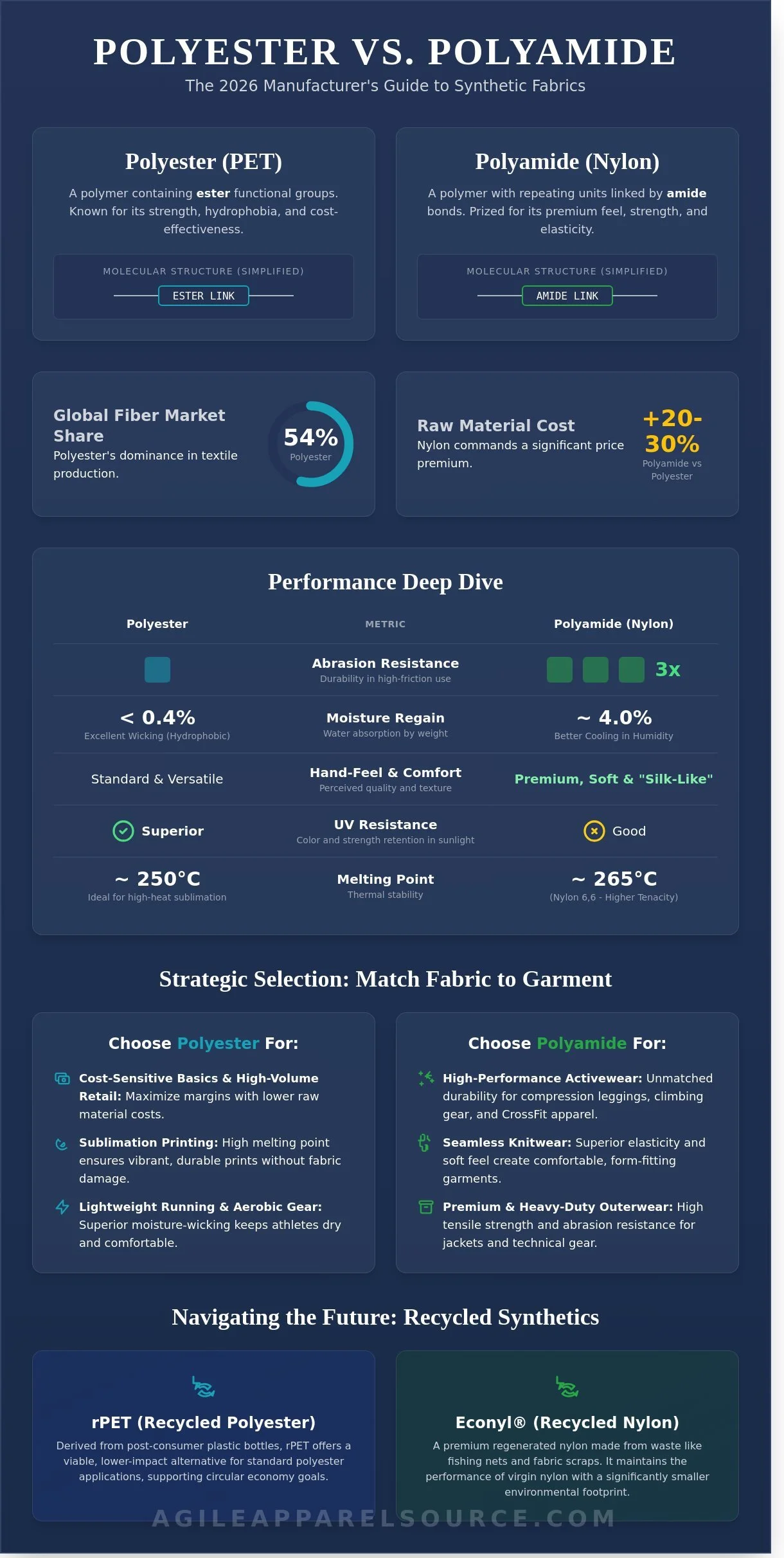
Comparison table between Polyester and Polyamide
Manufacturing & Sourcing: Cost, Dyeing, and Lead Times in 2026
The financial bridge between these two synthetics remains a critical factor for 2026 production budgets. Polyamide consistently commands a 20% to 30% price premium over polyester due to the higher costs of raw materials like caprolactam and the energy-intensive extrusion processes required for nylon 6,6. When analyzing polyester vs polyamide for high-volume activewear, these margins impact the final retail price point significantly. Brands must weigh this cost against the specific performance needs of their target demographic.
Dyeing chemistry further separates these fibers. Polyester utilizes disperse dyes applied at temperatures exceeding 130 degrees Celsius in pressurized vessels. This high-temperature dyeing for polyester can impact lead times in small-batch manufacturing, as specialized equipment availability often creates a 7 to 14-day bottleneck during peak production seasons. Polyamide uses acid dyes at lower temperatures, which offers a different set of challenges regarding color consistency across different batches.
Sourcing Synthetics in Vietnam
Vietnam has rapidly expanded its technical textile infrastructure, positioning itself as a hub for high-performance synthetics. Modern mills in provinces like Binh Duong now offer advanced knitting and dyeing capabilities that rival traditional leaders in Taiwan. Agile Apparel Source navigates this landscape by connecting brands with mills that offer flexible Minimum Order Quantities (MOQs). While many Vietnamese mills prefer MOQs of 1,500 meters per color, our strategic partnerships allow smaller brands to access technical fabrics at lower thresholds.
- Streamlined Logistics: Utilizing Vietnam’s growing mill network reduces transit times for raw materials.
- Full Package Production (FPP): Sourcing technical synthetics through an FPP model ensures that fabric testing, lab dips, and garment construction are managed as a single, cohesive workflow.
- Agile Solutions: We mitigate sourcing risks by identifying backup mills that maintain consistent yarn quality for repeat orders.
Colorfastness and Printability
Polyester remains the undisputed leader for sublimation printing. The fiber's molecular structure opens at high heat to absorb gaseous inks, creating permanent, high-definition designs that won't fade or crack. If your collection relies on intricate patterns or photographic prints, polyester is the necessary choice. It provides a stable canvas that resists the "grinning" effect often seen when fabrics are stretched.
However, the polyester vs polyamide debate shifts when discussing color vibrancy and durability. Polyamide is more vulnerable to UV light and chlorine, which can degrade the fiber's integrity over time. This makes it less ideal for prolonged outdoor use unless treated with specific stabilizers. Despite this, polyamide excels in aesthetic saturation. It holds acid dyes more effectively than polyester, making it the superior choice for achieving deep blacks and high-visibility neon colors that stay vibrant through multiple wash cycles.
Strategic Selection: Choosing the Right Fabric for Your Collection
Selecting between polyester vs polyamide requires a technical assessment of your garment’s specific end-use. For high-impact compression leggings, polyamide’s superior tensile strength and recovery make it the logical choice. Conversely, for lightweight running tees or moisture-wicking promotional gear, polyester’s lower cost and faster drying times provide a better ROI. Strategic selection isn't just about fabric feel; it's about aligning material properties with consumer expectations and retail price points.
Mid-to-high-end fashion brands must balance the price-quality equation carefully. Industry data shows that polyamide typically carries a price premium of 15% to 25% over high-grade polyester. You can optimize costs by adopting a hybrid approach. Blending 80% polyester with 20% elastane creates a durable, cost-effective fabric for entry-level lines. For boutique collections, a 75% polyamide blend offers the luxury hand-feel and durability that justifies a premium markup.
To prevent production errors and factory delays, your Tech Pack must be explicit. Don't simply list "Polyester" or "Nylon." You need to specify the GSM (Grams per Square Meter), the yarn count, and the specific filament type. Include the Global Recycled Standard (GRS) certification requirements if you're using rPET or recycled polyamide. Providing these details reduces factory sampling iterations by up to 30%, accelerating your speed-to-market and ensuring the final product matches your original design intent.
Best Use Cases for Polyester
- Budget-friendly activewear: Polyester is the standard for high-volume orders where maintaining a competitive price point is the primary goal.
- Outerwear shells: This fabric offers superior UV stability, retaining approximately 90% of its strength even after 1,000 hours of direct sun exposure.
- Sublimated designs: The polymer structure bonds perfectly with sublimation inks, ensuring vibrant, permanent all-over prints that won't fade or crack.
When Polyamide is Worth the Premium
- Premium yoga wear: Polyamide is essential for brands targeting the "buttery soft" sensory experience that consumers associate with luxury athleisure.
- High-compression gear: The recovery rate of polyamide is 2.5 times higher than polyester, ensuring garments maintain their shape after 50 or more wash cycles.
- Luxury swimwear: Polyamide provides a glossy, high-end finish and resists chlorine degradation more effectively than standard synthetic alternatives.
Optimizing your material selection is the first step toward building a scalable and successful production line. Partner with Agile Apparel Source to streamline your sourcing and secure the highest quality textiles for your next collection.
Navigating the Future: Sustainability and Recycled Synthetics
The technical debate of polyester vs polyamide now centers on circularity and environmental impact. Recycled polyester, or rPET, serves as a cornerstone for performance brands aiming to lower their carbon footprint. Producing rPET requires 59% less energy than virgin polyester, providing a powerful data point for brand storytelling. For swimwear and high-compression leggings, Econyl and other recycled polyamides represent the premium standard. These fibers utilize diverted landfill waste and abandoned fishing nets, turning ocean debris into high-performance textiles that maintain 100% of their original physical properties.
Microplastic shedding remains a critical concern during the wash cycle. Research indicates that both fibers release microfibers, but the construction of the yarn matters more than the polymer type. High-tenacity polyamide fibers typically resist mechanical stress better than lower-grade polyester, leading to fewer microplastics in wastewater. By 2026, Vietnam's textile industry plans to implement nationwide solar mandates and water recycling quotas. This "Green Manufacturing" initiative positions the region as a primary hub for brands requiring ethical, large-scale production that meets strict EU and US environmental regulations.
The Rise of Bio-Based Synthetics
Innovations like castor oil-derived polyamide 11 (PA11) are moving from niche prototypes to commercial reality. These bio-synthetics offer a 40% reduction in CO2 emissions compared to petroleum-based alternatives. When evaluating polyester vs polyamide in a bio-based context, polyamide currently leads in commercial availability for performance wear. However, low MOQ production remains a challenge. Most bio-based textile mills require minimum orders of 3,000 meters or more. Brands must also budget for a 15% to 25% price premium when transitioning from virgin to recycled or bio-based fibers.
Agile Apparel’s Commitment to Ethical Sourcing
We vet every Vietnam-based facility for environmental compliance, focusing on ISO 14001 certification and chemical management standards. Our team ensures transparency throughout the recycled fiber supply chain by verifying Global Recycled Standard (GRS) certifications at the source. We eliminate the guesswork in sustainable procurement, allowing you to scale with confidence. It's our job to handle the logistics so you can focus on design.
Ready to source sustainable fabrics? Partner with Agile Apparel Source for your next collection.
Optimize Your 2026 Material Strategy
Deciding between polyester vs polyamide isn't just about hand-feel; it's about aligning technical specs with 2026 market demands. Polyester provides the high-tenacity durability needed for performance outerwear, while polyamide delivers the 20% to 30% elasticity required for premium compression gear. As global mandates like the EU Strategy for Sustainable and Circular Textiles tighten, your choice of recycled rPET or Nylon 6 will define your brand's market viability. Success requires a partner who understands these nuances and manages the inherent headaches of global sourcing. We provide Vietnam-based craftsmanship paired with the security of US legal protection to ensure your designs are executed perfectly. Our team handles everything from expert fabric sourcing to detailed tech pack development, moving your collection through the production lifecycle with precision. You'll maintain a competitive edge by keeping inventory lean and responsive to shifting trends.
Start your production journey with Agile Apparel Source, Low MOQ manufacturing with US-based security. We facilitate low MOQs starting at 150 units, making it easier than ever to scale your vision. You've got the designs; let's build the supply chain that brings them to life.
Frequently Asked Questions
Is polyamide the same as polyester?
No, polyamide and polyester are distinct synthetic polymers with different chemical structures. While both are petroleum-based, polyamide offers 20% more elasticity and a softer hand-feel compared to the stiffer, more durable nature of polyester. When evaluating polyester vs polyamide for your tech pack, remember that polyamide fibers are generally more expensive to produce due to a complex polymerization process.
Which fabric is better for sweat-wicking: polyester or polyamide?
Polyester is the superior choice for sweat-wicking because it's naturally hydrophobic and absorbs less than 0.4% of its weight in water. Polyamide is more absorbent, taking on up to 4% moisture, which can make garments feel heavy during high-intensity training. Most performance brands use polyester for base layers to ensure rapid evaporation and keep athletes dry during 60-minute workouts.
Why is polyamide (nylon) more expensive than polyester?
Polyamide costs more because the raw materials and energy required for its production are significantly higher. Manufacturing Nylon 6,6 involves a more intensive chemical process than the melt-spinning used for standard polyester. Additionally, polyamide’s superior strength-to-weight ratio and dye affinity command a premium in the global textile market, often resulting in a 20% to 30% price increase per yard.
Can you sublimate on polyamide fabrics?
You can sublimate on polyamide, but it's risky because the fabric's melting point is roughly 220 degrees Celsius, which is close to sublimation temperatures. Polyester remains the industry standard for sublimation because it handles the 200-degree heat without losing structural integrity. For polyamide, we recommend screen printing or using specialized low-temperature transfer films to prevent fiber damage and maintain fabric elasticity.
Does polyester or polyamide pill more easily?
Polyamide tends to pill more frequently because its high-strength fibers don't break away easily when they tangle. When comparing polyester vs polyamide, polyester's higher resistance to abrasion often results in a cleaner surface over long-term use. We suggest using anti-pilling finishes or specific knit constructions to mitigate this issue in premium activewear lines that undergo frequent friction.
Which is more eco-friendly: recycled polyester or recycled polyamide?
Recycled polyester is currently more eco-friendly because the infrastructure for recycling PET bottles is well-established globally. While recycled polyamide exists, it often requires chemical recycling which uses more energy than the mechanical recycling used for rPET. Over 90% of recycled synthetics in the current market are polyester-based due to this supply chain efficiency and lower carbon footprint during processing.
How do I know which fabric my factory is actually using?
You must verify fabric composition through third-party laboratory testing like SGS or Intertek to ensure your factory meets the tech pack specifications. A standard fiber identification test costs approximately $50 to $100 and provides a definitive percentage breakdown of the material. Don't rely solely on factory-provided swatches; request a finished garment test from the bulk production lot to confirm compliance.
What is the best fabric for high-compression leggings?
Polyamide-elastane blends are the gold standard for high-compression leggings because they provide superior recovery and a second-skin feel. A typical high-performance blend consists of 75% polyamide and 25% spandex. This combination ensures the garment maintains its shape after 50 or more wash cycles, whereas polyester blends may lose their compressive tension and elasticity more quickly over time.
As a leading sourcing agent in Vietnam, Agile Apparel Source helps you choose the right high-performance fabrics for your collection. Contact us for a technical consultation. Ready to start your collection? Click here to get a Low MOQ quote
