
The Ultimate Guide to Streetwear Manufacturing: Scaling Your Brand in 2026
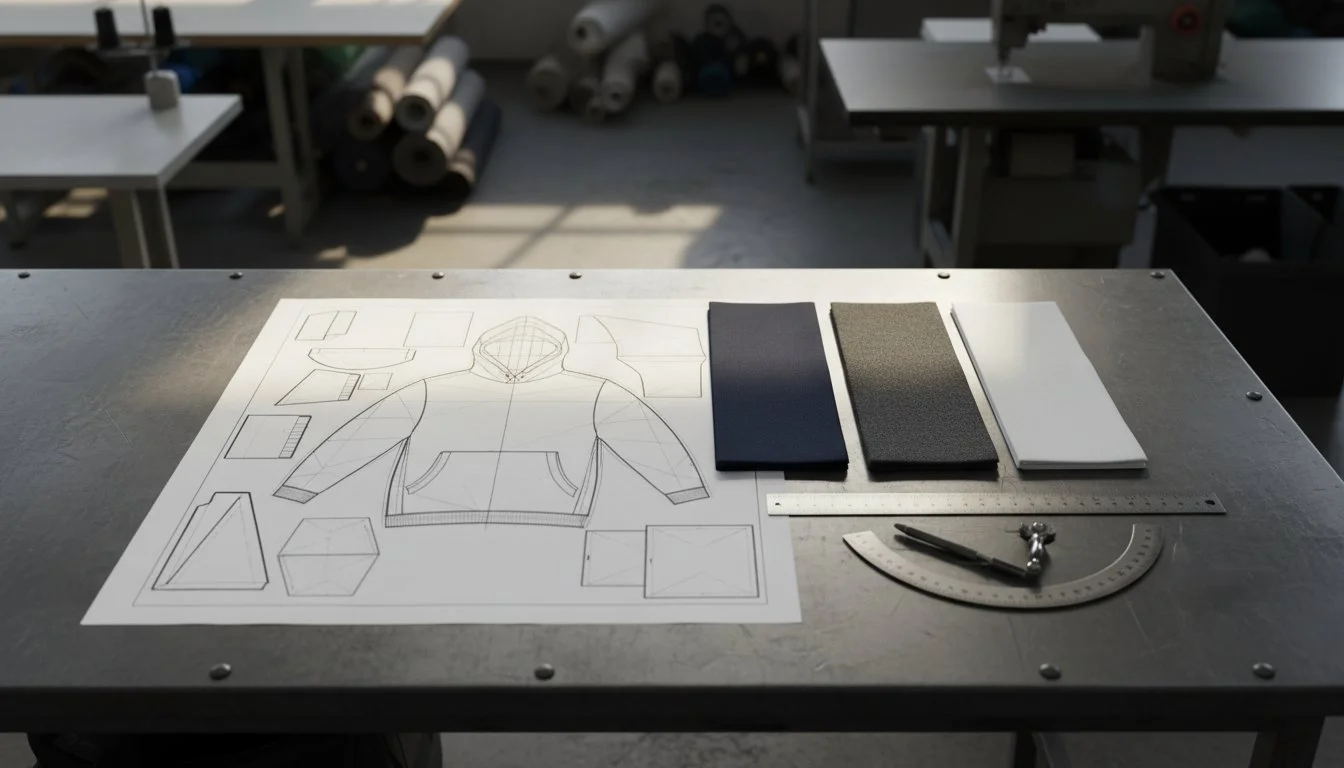
The Ultimate Guide to Streetwear Manufacturing: Scaling Your Brand in 2026.
In 2026, the traditional 1,000-unit minimum order quantity is officially a relic of the past for brands that prioritize agility over inventory bloat. Recent industry data shows that 68% of independent labels cite production bottlenecks as their primary barrier to scaling. You understand that the difference between a viral drop and a logistical nightmare often comes down to the technical precision of your streetwear manufacturing partner. It's frustrating when inconsistent sizing on oversized garments or a lack of legal protection for your designs stalls your momentum. You need a partner that functions as a strategic extension of your team, not just another vendor across an ocean.
This guide provides the blueprint to mastering production by securing high-quality heavyweight fabric sources and implementing US-standard intellectual property safeguards. We will detail the exact steps to transition from small-batch samples to a fully scalable, end-to-end production model that protects your brand's creative assets and ensures every hoodie meets your exact specs. You'll learn how to eliminate communication gaps and establish a responsive supply chain that keeps pace with rapid fashion cycles.
Key Takeaways
Learn how to source specialized heavyweight fabrics and master the oversized fits that traditional mass-production factories often overlook.
Optimize your streetwear manufacturing lifecycle by selecting the ideal production model between FPP and CMT to suit your brand’s technical requirements.
Evaluate the strategic advantages of the "China Plus One" model and why Vietnam has emerged as the premier hub for high-end technical apparel in 2026.
Secure your intellectual property and mitigate overseas production risks by implementing US-standard legal contracts and robust quality control protocols.
Scale your brand efficiently using agile production solutions that offer low MOQs and seamless end-to-end management from concept to final delivery.
Table of Contents
Understanding the Streetwear Manufacturing Landscape in 2026
Vietnam vs. China: The "China Plus One" Strategy for Streetwear
Understanding the Streetwear Manufacturing Landscape in 2026
The 2026 market demands more than just a logo on a pre-made blank. Modern streetwear manufacturing has evolved into a high-stakes technical discipline where fabric weight and silhouette precision dictate brand authority. Traditional mass-production factories often fail urban brands because their infrastructure is built for high-volume, low-complexity garments. These facilities prioritize speed over the nuanced requirements of the History of Streetwear, which now centers on heavy-duty constructions and specialized aesthetics.
Brand owners are moving away from generic templates in favor of high-end custom cut-and-sew production. This shift allows for total control over the garment's architecture. Success in the current climate requires a manufacturing partner that understands the "Agile" model. This approach replaces the outdated 500-unit minimum order quantity (MOQ) standard with flexible, smaller batches. It enables brands to respond to trends in real-time without the burden of deadstock.
The Evolution of Streetwear Quality Standards
In 2026, 400gsm to 600gsm fabrics have become the baseline for premium streetwear hoodies. Consumers now equate weight with value, making lightweight alternatives obsolete in the luxury-urban segment. Manufacturing must include specialized finishing techniques such as acid washes, enzyme treatments, and distressed detailing to achieve a vintage hand-feel. Additionally, 85% of leading streetwear brands now integrate sustainable textiles, such as organic cotton or recycled polyester, as a foundational requirement rather than an optional feature.
Why "Low MOQ" is the Streetwear Founder’s Greatest Tool
Low MOQs act as a strategic hedge against market volatility. By utilizing 150-unit minimums, founders can test five different SKUs for the same capital outlay previously required for a single bulk run. This agility supports the "drop" culture that defines the industry. Smaller production cycles create a psychological sense of scarcity, driving consumer urgency and maintaining high resale values. Key benefits of this model include:
Reduced Inventory Risk: Brands don't tie up capital in thousands of unsold units.
Higher SKU Diversity: Founders can experiment with bold colorways or experimental fits across limited edition capsules.
Streamlined Scalability: Production scales upward only after a design proves its market fit through initial sell-through data.
A professional streetwear manufacturing strategy focuses on these technical details from the initial tech pack to the final quality control check. This ensures that every garment meets the rigorous durability and style standards expected by the modern global consumer.
Technical Specs: Master the Streetwear Production Lifecycle
Precision in the development phase dictates the difference between a premium drop and a total loss. In 2026, streetwear manufacturing relies on digital accuracy and strategic material sourcing to meet consumer expectations for durability and fit. A single measurement error in the initial stages can ruin an entire production run of 500 units, making technical expertise your most valuable asset.
Tech Pack Creation: Your Blueprint for Success
A tech pack functions as your legal and technical contract with the factory. It must include a comprehensive Bill of Materials (BOM), graded measurement charts, and specific stitch instructions such as 10 to 12 stitches per inch for heavy jersey. Most sizing inconsistencies occur because brands provide vague point-of-measurement (POM) definitions. In 2026, leading brands use 3D sampling software to visualize drape and fit before a single yard of fabric is cut. This digital shift reduces physical prototyping cycles by 40 percent, accelerating your speed to market. During this technical design phase, ensure your logos and unique identifiers are documented to align with U.S. Trademark Law, protecting your intellectual property before mass production begins.
FPP vs. CMT: Which Model Fits Your Brand?
Choosing a production model determines your operational involvement and overhead.
CMT (Cut, Make, Trim): You provide the fabric, labels, and trims. The factory only provides labor. This offers maximum control over fabric quality but requires you to manage complex logistics and multiple vendors.
FPP (Full Package Production): The manufacturer handles everything from fabric sourcing to final packing. This is the preferred model for scaling brands.
Agile Apparel Source manages the end-to-end FPP process, which typically saves founders 20 to 30 hours of logistics management per week. Transitioning to FPP is recommended once your order volume exceeds 300 units per style, as it allows you to focus on marketing rather than tracking fabric shipments.
Pattern Making and Fabric Sourcing in 2026
The "Perfect Fit" in 2026 has shifted toward structured, boxy silhouettes that maintain their shape after multiple washes. Achieving this requires precise grading. For oversized garments, you must adjust the shoulder drop and sleeve length proportionally to ensure the wearer doesn't look swallowed by the fabric.
Sourcing now prioritizes high-density textiles. Look for 400GSM to 500GSM organic cotton for hoodies and technical blends like recycled nylon for outerwear. Global supply chains are increasingly volatile; therefore, securing your textile commitments six months in advance is a standard industry practice. You can consult with production experts
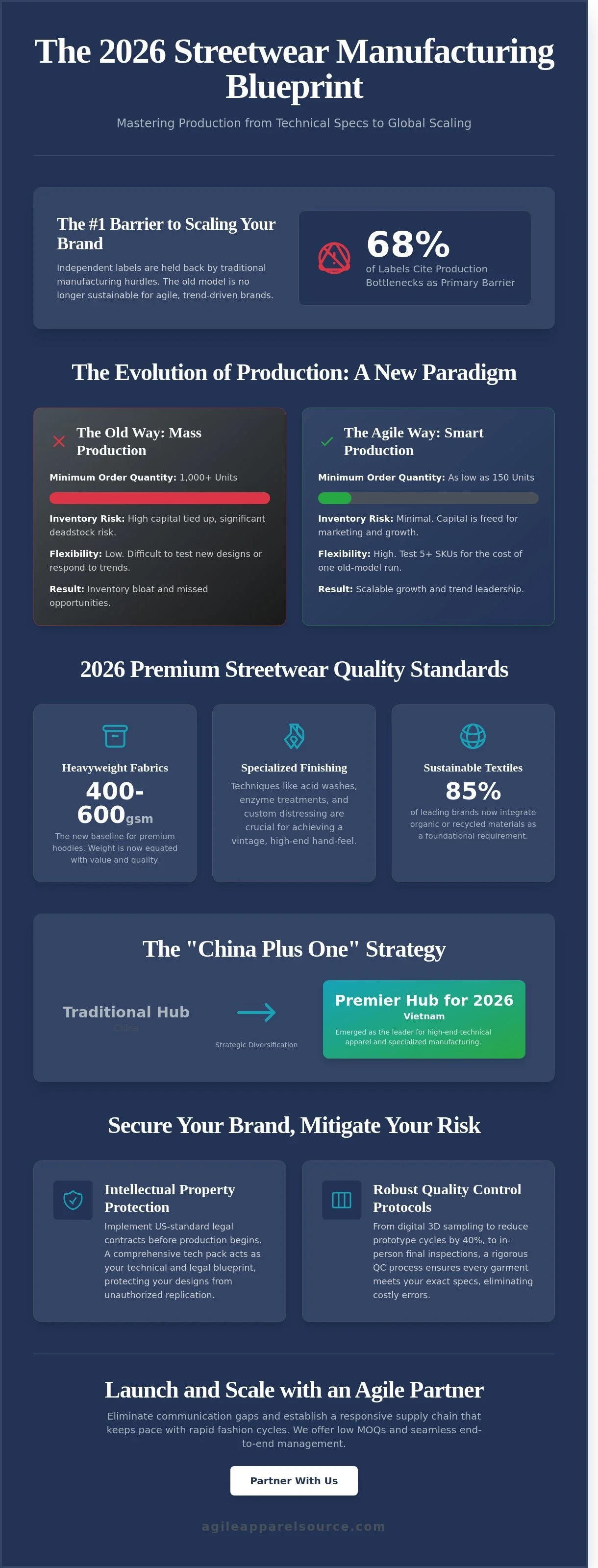
The 2026 Streetwear Manufacturing Blueprint.
Vietnam vs. China: The "China Plus One" Strategy for Streetwear
The "China Plus One" strategy has evolved from a cautious backup plan into a mandatory operational standard for brands scaling their streetwear manufacturing. By 2026, the shift toward Vietnam represents a strategic pivot for labels that prioritize technical precision and supply chain resilience. While China remains a powerhouse for massive volume, Vietnam has secured its position as the premier hub for mid-to-high-end streetwear that requires complex construction and specialized textiles.
Data from global streetwear market projections indicates that the industry continues to expand at a rapid CAGR, pushing brands to find production partners that can handle sophisticated designs without the volatility of a single-source supply chain. Diversifying into Vietnam mitigates geopolitical risks and provides a buffer against fluctuating trade policies. This dual-sourcing model ensures that a disruption in one region won't paralyze your entire seasonal rollout.
Why Streetwear Brands are Flocking to Vietnam
Vietnam offers a unique value proposition where lower labor costs don't compromise the final product's integrity. In 2026, the country's manufacturing sector has matured, investing heavily in specialized machinery for 500GSM heavyweight knits and complex technical activewear. Vietnamese factories often maintain higher ethical standards and sustainability certifications, such as LEED or WRAP, which aligns with the transparency demands of modern streetwear consumers. The craftsmanship is world-class; you'll find superior stitching density and reinforced seam construction that defines high-durability streetwear.
Mitigating Global Supply Chain Risks
Relying on a single country for 100% of your production is a liability. A Vietnam-based production line protects your brand from sudden tariff spikes and trade barriers that often impact Chinese exports. Strategic diversification creates long-term brand stability. Agile Apparel Source facilitates this transition by combining local Vietnamese manufacturing expertise with US-based management. This hybrid model eliminates communication gaps and ensures your tech packs are executed with surgical precision. It's about building a responsive network that can absorb market shocks.
Key benefits of the Vietnam-centric approach include:
Trade Advantages: Utilization of the CPTPP and other free trade agreements to reduce landed costs for international shipping.
Technical Mastery: Access to advanced bonding, laser cutting, and ultrasonic welding for techwear-inspired pieces.
Scalability: Flexible production lines that accommodate both mid-sized runs and large-scale distribution as your brand grows.
Ethical Compliance: Streamlined oversight of labor practices to meet the rigorous ESG requirements of 2026 investors.
Successful streetwear manufacturing in the current era isn't just about finding the lowest price. It's about securing a partner that understands the intersection of high-fidelity craftsmanship and logistical agility. By balancing production between established hubs and emerging technical leaders, your brand maintains the momentum needed to dominate a competitive market.
Securing Your Brand: Legal Protection and Quality Control
Scaling streetwear manufacturing requires more than just finding a factory; it demands a defensive strategy against intellectual property (IP) theft. The "Trust Gap" remains a significant hurdle in global production. Industry data suggests that "ghost production", where factories produce unauthorized units of your designs for secondary markets, contributes to the multi-billion dollar counterfeit industry. Protecting your brand in 2026 means closing these loopholes before the first sample is cut.
Intellectual Property in the Age of Fast Fashion
Protecting your brand starts with a US-based legal framework. While your production might happen in Vietnam or across Asia, your contract shouldn't exist in a legal vacuum. Agile Apparel Source utilizes US-enforceable manufacturing agreements to bridge this gap. This provides a clear path for legal recourse that doesn't rely solely on foreign courts. We implement strict NDAs and "No-Resale" clauses that prevent factories from retaining your tech packs or patterns after a production run concludes. This ensures your seasonal collections stay exclusive to your authorized sales channels.
The Three Pillars of Quality Control
Precision is the only way to maintain brand equity at scale. Our three-layer system eliminates the guesswork often found in standard streetwear manufacturing setups. We don't wait until the goods arrive at your warehouse to check for errors.
Initial Fabric Testing: We verify GSM (Grams per Square Meter) and colorfastness against your specific tech pack requirements before the bulk run begins. If the hand-feel or weight deviates by even 5%, we stop the process.
In-line Inspections: Our technicians catch construction errors when the run is 15% to 20% complete. If a double-needle stitch isn't hitting the mark, we correct the machinery immediately.
Final AQL Audits: We utilize the ISO 2859-1 standard for Final AQL (Acceptable Quality Level) audits. This is the last line of defense, ensuring every garment meets a strict 2.5 defect limit before it's packed for transit.
Shipping and customs shouldn't be a source of stress for your design team. We manage the entire logistical chain, from accurate HTS code classification to final port clearance. This proactive approach prevents the 25% or higher duty penalties that often hit brands who misclassify their technical garments. We handle the paperwork so you can focus on the next drop.
Secure your brand's future and eliminate production risks. Partner with Agile Apparel Source to stabilize your supply chain today.
Launch and Scale: Partnering with Agile Apparel Source
Agile Apparel Source bridges the gap between high-tier Vietnamese craftsmanship and the logistical precision of US-based management. This hybrid model solves the primary pain points in global streetwear manufacturing, specifically the lack of transparency and the high risk of miscommunication. We operate as a fixer for your supply chain; we ensure that technical specifications translate perfectly from digital tech packs to physical garments. Our presence on the ground in Vietnam allows us to oversee production in real-time while providing you with the accountability of a domestic partner.
Our low MOQ solution allows brands to initiate production with just 150 units. This is a critical entry point for 2026, where market testing and agility are more valuable than bloated inventory. We handle the entire source-to-shelf journey, including raw material sourcing, prototype development, and bulk production. This end-to-end involvement ensures that quality remains consistent as you scale from niche drops to large-scale retail distribution. You don't have to worry about the complexities of international logistics; we streamline the movement of goods from the factory floor to your warehouse.
The Agile Partnership Model
We don't view ourselves as a vendor. Instead, we're a strategic extension of your design team. Our project management methodology uses a logical sequence to keep you informed at every milestone. We focus on proactive problem-solving, identifying potential production bottlenecks before they impact your launch date. This transparent approach builds the trust necessary for long-term brand growth.
Strategic Integration: We align our production schedules with your marketing calendar to ensure timely drops.
Global Oversight: US-based managers handle your account while our Vietnamese teams manage daily factory operations.
Proven Results: In 2024, we helped a boutique brand scale from a single sample to a full 14-piece collection in under seven months. By utilizing our localized sourcing network, they achieved a 22% reduction in lead times compared to their previous suppliers.
Ready to Start Your Streetwear Journey?
The onboarding process is streamlined for speed and starts with your tech pack. Our technical team analyzes your construction methods and suggests optimizations to improve durability. After the initial review, we produce physical samples for your approval. This phase ensures every seam, fabric weight, and print method meets your standards. To get an accurate quote for your custom project, submit your design files and target quantities through our portal. We provide clear, itemized breakdowns so you can manage your margins effectively.
Our infrastructure is built to grow alongside your ambition. Whether you're refining your first prototype or preparing for a national retail rollout, we provide the technical expertise and manufacturing power to make it happen. Launch your streetwear brand with Agile Apparel Source today.
Future-Proof Your Streetwear Production Today
Navigating the complexities of streetwear manufacturing in 2026 requires more than just a creative vision. It demands a technical approach to production lifecycles and a diversified supply chain that leverages the China Plus One strategy. By shifting focus toward Vietnam's specialized facilities and maintaining rigorous 3-layer quality control systems, brands can eliminate the common bottlenecks that stall growth. Success in the current market hinges on your ability to protect intellectual property through US-based legal frameworks while maintaining the agility to scale without excessive overhead.
Agile Apparel Source acts as your strategic partner, bridging the gap between design and delivery. We provide the technical expertise needed to manage complex tech packs and optimize lead times. With low 150-unit MOQs and deep-rooted Vietnam-based production knowledge, we help you launch collections faster and with higher precision. It's time to streamline your operations and secure your brand's future. We're ready to help you navigate every logistical hurdle with confidence.
Get a Custom Streetwear Manufacturing Quote
Let's build your brand's legacy together.
Frequently Asked Questions
What is the standard MOQ for streetwear manufacturing?
Standard MOQs for streetwear manufacturing typically range from 50 to 300 pieces per style depending on the factory's scale. Agile Apparel Source optimizes these minimums by leveraging tiered production networks that accommodate both emerging and established brands. We focus on 100 piece minimums for custom silhouettes to ensure high quality while maintaining brand agility. This approach lets you test 3 or 4 designs without committing to excessive inventory.
How do I protect my streetwear designs when manufacturing overseas?
You protect your intellectual property by signing comprehensive Non-Disclosure Agreements (NDAs) and manufacturing agreements that specify ownership of tech packs and patterns. We secure your designs through a vetted network of 15 partner factories in Vietnam that adhere to strict data security protocols. This legal framework ensures your proprietary designs remain exclusive. We also manage physical sample destruction to prevent unauthorized design leaks and protect your brand equity.
What is the difference between FPP and CMT manufacturing?
Full Package Production (FPP) covers the entire process from fabric sourcing to final shipping; whereas Cut, Make, Trim (CMT) requires you to provide the raw materials. Agile Apparel Source functions as an FPP partner, managing the 12 distinct stages of production including pattern making, grading, and logistics. This model reduces your overhead by eliminating the need for internal supply chain managers. Most brands choose FPP to save 20 hours of logistics management per week.
How long does the streetwear sampling and production process take?
The standard timeframe for streetwear sampling is 14 to 21 days, followed by a 45 to 60 day bulk production cycle. These lead times fluctuate based on fabric availability and seasonal demand spikes in the Q3 production window. We streamline this by using real-time tracking to hit your launch dates without compromising on the 100 percent inspection quality standard. You should plan for a total 90 day window from concept to final delivery.
What fabric weight (GSM) should I use for a premium streetwear hoodie?
A premium streetwear hoodie requires a fabric weight between 400 and 500 GSM (Grams per Square Meter) to achieve the desired structured drape. High-end brands often specify a 450 GSM heavy fleece with a 100 percent cotton face for superior printability. This density provides the durability and heavy feel that 85 percent of luxury streetwear consumers expect from high-tier collections. It's the standard for brands looking to compete in the premium price bracket.
Can I manufacture sustainable streetwear in Vietnam?
You can manufacture sustainable streetwear in Vietnam by utilizing factories certified by the Global Organic Textile Standard (GOTS) or the Global Recycled Standard (GRS). Vietnam's textile sector has seen a 15 percent increase in green manufacturing investment since 2022. We source GOTS-certified organic cotton and recycled polyester to meet the rising demand for ethical production cycles. This ensures your brand aligns with the sustainability requirements of the 2026 fashion market.
Why do I need a tech pack for my streetwear brand?
A tech pack serves as the blueprint for your garment, containing every technical specification from measurements to stitch counts. It eliminates 95 percent of communication errors during the sampling phase by providing factories with a definitive guide. Without a tech pack, your streetwear manufacturing process lacks the precision needed to replicate your vision across different size runs. It's an essential document that serves as your contract for quality, fit, and construction.
How does Agile Apparel Source ensure sizing consistency across bulk orders?
Agile Apparel Source ensures sizing consistency by implementing a 3-point inspection process that compares bulk garments against the approved gold sample. We use digital pattern grading software to maintain a tolerance level of plus or minus 1 centimeter across all dimensions. Our quality control teams perform on-site checks at the 20, 50, and 100 percent production milestones to verify accuracy. This rigorous oversight prevents the fit discrepancies that often plague 30 percent of unmanaged bulk orders.
As a leading sourcing agent in Vietnam, Agile Apparel Source helps you choose the right high-performance fabrics for your collection. Contact us for a technical consultation. Ready to start your collection? Click here to get a Low MOQ quote.
