
What is Lycra? A Professional Guide to the World’s Most Famous Stretch Fiber
According to industry reports from 2023, nearly 80% of consumer returns in the performance wear category are attributed to fabric fatigue and loss of shape. You likely understand that maintaining garment integrity after 50 wash cycles is the standard for premium apparel, yet many brands still struggle with the 'bag and sag' effect that quickly erodes customer trust. This guide answers the fundamental question, what is lycra, while moving beyond the basics to reveal the technical science and strategic manufacturing benefits of this trademarked fiber.
You'll discover why the distinction between brand-name fibers and generic elastane is critical for your 12 month production strategy. We provide a clear framework for choosing the right stretch components and outline a streamlined path for sourcing high-end materials even with low MOQ requirements. By the end of this professional briefing, your design team will have the technical knowledge needed to optimize fabric performance and eliminate the risks associated with low-quality stretch alternatives. We've structured this information to help you move from concept to shelf with total confidence in your material selection.
Key Takeaways
- Understand the technical distinction between generic elastane and the trademarked brand to ensure your product specifications remain precise and high-performing.
- Gain a comprehensive understanding of what is lycra and how its unique molecular structure allows for superior recovery without the risk of bagging or sagging.
- Learn to determine optimal fiber percentages and navigate the sourcing process with certified mills to guarantee hang-tag authenticity for your brand.
- Identify the critical quality differences between premium Lycra and low-cost alternatives to protect your garments from oxidation and UV damage.
- Discover how to integrate technical tech packs and agile sourcing strategies to streamline your production cycle from initial concept to consumer-ready activewear.
Table of Contents
- What is Lycra? Deciphering the Brand, the Fiber, and the Science
- The Anatomy of Stretch: How Lycra Enhances Garment Performance
- Sourcing and Manufacturing with Lycra: A Guide for Fashion Brands
- Overcoming Common Misconceptions: Durability, Care, and Cost
- Strategic Sourcing: Leveraging Lycra for High-Performance Activewear
What is Lycra? Deciphering the Brand, the Fiber, and the Science
Understanding what is lycra requires looking beyond the retail label to the chemical engineering that defines modern apparel performance. Invented in 1958 by Dr. Joseph Shivers at the DuPont laboratory in Waynesboro, Virginia, Lycra was the first synthetic fiber to offer a viable alternative to heavy, heat-sensitive natural rubber. It's scientifically classified as a polyether-polyurea copolymer, a type of segmented polyurethane that provides up to 500% elasticity without losing its original shape. This durability makes it a critical component for designers who prioritize long-term garment integrity and consistent fit.
The molecular structure of Lycra consists of alternating rigid and flexible segments. The flexible sections provide the extreme stretch, while the rigid sections act as molecular anchors that pull the fiber back to its resting state. This dual-action chemistry is why Lycra outperforms rubber in weight, strength, and versatility. When blended with natural fibers like cotton or wool, it adds a functional dimension that allows fabrics to move with the body while maintaining a professional silhouette. For manufacturers, this means creating garments that resist sagging and bagging, even after repeated wear cycles.
Lycra vs. Spandex vs. Elastane: What is the Difference?
Industry professionals often encounter a confusing web of terminology when sourcing materials. Spandex is the common generic term used primarily in North American markets. Conversely, elastane is the preferred technical designation throughout Europe and international trade zones. The term Spandex (Lycra) clarifies that while all Lycra is elastane, not all elastane meets the rigorous quality benchmarks of the Lycra brand. Lycra is a premium trademarked brand currently owned by The Lycra Company. It's often held to higher standards for uniformity and recovery compared to generic elastane alternatives, making it the preferred choice for high-end activewear and medical compression garments.
How Lycra Fiber is Manufactured
The production of Lycra involves a precise chemical sequence known as dry spinning, which ensures the fiber's characteristic strength. The process follows these technical steps:
- Prepolymer Formation: Engineers react a polyether with a diisocyanate to create a prepolymer, the foundation of the fiber's stretch.
- Chain Extension: This prepolymer reacts with a diamine acid and is thinned with a specific solvent to achieve the correct viscosity for extrusion.
- Fiber Extrusion: The solution is forced through a spinneret, a metal plate with microscopic holes, into a heated nitrogen gas chamber.
- Solidification: As the solution travels through the chamber, the solvent evaporates, solidifying the liquid into the high-stretch strands used in your tech packs.
By controlling these variables, manufacturers can produce fibers with specific deniers and performance characteristics tailored to diverse apparel applications. This level of technical precision is why understanding what is lycra is essential for any brand looking to optimize its textile supply chain.
The Anatomy of Stretch: How Lycra Enhances Garment Performance
Understanding what is lycra requires a look at its molecular capabilities. This synthetic fiber, chemically known as elastane, provides a performance baseline that natural fibers simply cannot match. A single Lycra filament can extend up to eight times its original length. This isn't just about reach; it's about the immediate return to the original state. High-quality Lycra blends maintain 99% of their shape even after 500 wash cycles, preventing the permanent deformation often seen in budget-tier elastic alternatives.
Performance isn't limited to elasticity. While pure cotton holds up to 25 times its weight in water, Lycra blends accelerate moisture transport. The fiber's hydrophobic nature helps push sweat away from the skin to the fabric's surface for faster evaporation. This durability extends to chemical resistance. Lycra withstands consistent exposure to body oils, perspiration, and common laundry detergents that typically degrade standard elastic polymers over time. It remains stable at heat levels required for industrial drying, making it a staple for high-utility apparel.
Shape Retention and Compression in Activewear
High-performance leggings typically incorporate 15% to 22% Lycra to facilitate muscle oscillation control. This specific level of compression reduces muscle fatigue during high-impact activities by stabilizing the tissue. In technical apparel production, we differentiate between 'power stretch' and 'comfort stretch.' Power stretch utilizes higher denier fibers for targeted support and medical-grade compression. Comfort stretch focuses on a 25% to 35% elongation range for daily ease of movement. This technical precision eliminates 'knee bagging,' a common failure where fabric loses its memory and sags at high-friction points after repeated wear.
Breathability and Comfort for All-Day Wear
Lycra fibers are exceptionally thin, often measuring between 10 and 30 microns. This fineness allows textile mills to create tighter, more sophisticated knit structures that don't sacrifice airflow. The resulting 'hand-feel' is significantly smoother against the skin, which reduces chafing during 12-hour wear cycles. These blends also contribute to thermal regulation. By maintaining a consistent microclimate between the skin and the fabric, Lycra helps the wearer stay cool during exertion and warm during rest. If you're looking to optimize your next collection's performance, partnering with a responsive sourcing expert can help you select the exact blend for your specific requirements.
When designers ask what is lycra in the context of modern fashion, the answer is versatility. It acts as the structural backbone of the garment. It ensures that a piece of clothing looks the same after ten hours of wear as it did when first put on. This reliability is why the fiber remains the gold standard for brands prioritizing longevity and technical excellence in their supply chains.
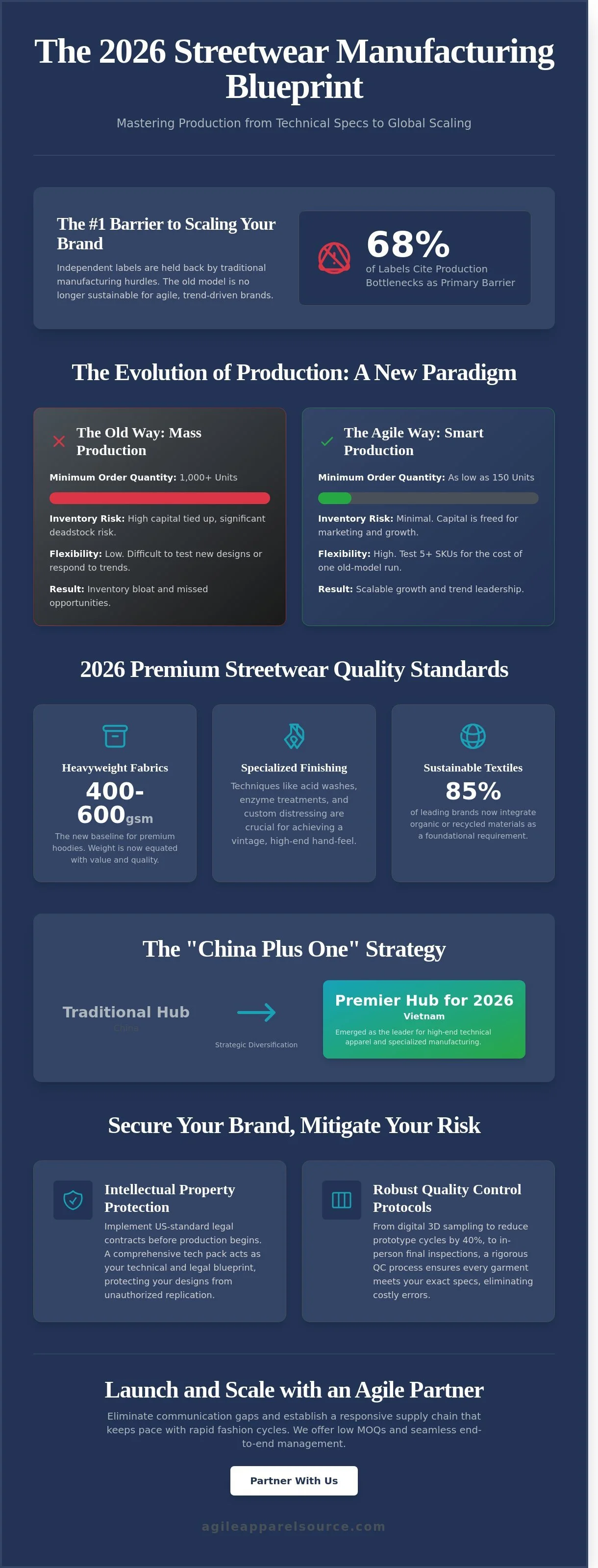
The 2026 Streetwear Manufaturing Blueprint.
Sourcing and Manufacturing with Lycra: A Guide for Fashion Brands
Selecting the right textile composition starts with a technical analysis of the garment's end use. When brands ask what is lycra in the context of production, they're really asking about tensile strength and recovery rates. For a standard cotton t-shirt, a 5% Lycra blend provides the necessary shape retention without compromising breathability. In contrast, high-performance compression gear requires 15% to 22% Lycra content to ensure the garment moves with the athlete. Sourcing must happen through Lycra-certified mills. This ensures you receive the official hang-tags that validate the premium branding to your customers.
Production success relies on a three-layer quality control protocol. First, we test the raw fabric rolls for stretch consistency. Second, we monitor tension settings during the knitting and sewing phases to prevent seam puckering. Finally, we conduct post-wash recovery tests to ensure the garment returns to its original dimensions. This methodical approach eliminates the risk of size graduation errors before the product hits the retail floor. Understanding what is lycra at a sourcing level means recognizing that quality isn't just about the fiber, it's about how that fiber is integrated into the final knit structure.
Blending Lycra with Other Fibers
Cotton-Lycra blends are the industry standard for casual wear. A 5% inclusion is the sweet spot that adds enough elasticity to prevent bagging at the knees or elbows. For high-end leggings and swimwear, polyamide (nylon) blended with Lycra remains the gold standard. This combination provides a smooth hand-feel and superior resistance to chlorine and oils. Polyester-Lycra blends offer a cost-efficient alternative for high-volume gym apparel, delivering excellent moisture-wicking properties and durability for repetitive movement.
Managing MOQs and Lead Times in Vietnam
Vietnam has emerged as the primary 'China Plus One' destination for technical apparel. The country's textile exports reached $44 billion in 2022, driven by massive investments in technical knitting facilities. Many Vietnamese factories now offer flexible minimum order quantities (MOQs) as low as 500 units per style for premium Lycra blends. This allows emerging brands to scale without excessive inventory risk. Working with a partner that provides US-based legal security ensures that your intellectual property and high-value material investments remain protected throughout the international supply chain. This structure simplifies the transition from concept to shelf while maintaining strict ethical standards.
Overcoming Common Misconceptions: Durability, Care, and Cost
Understanding what is lycra requires looking past the surface level of generic elastane. Many designers assume all stretch fibers perform identically, but generic spandex often loses up to 25% of its recovery power after just 10 wash cycles. Branded Lycra fibers maintain their shape significantly longer because of superior molecular bonding. Another common myth involves the "yellowing" of white garments. While early versions of spandex oxidized when exposed to chlorine or UV light, modern Lycra incorporates proprietary stabilizers that prevent discoloration for over 50 hours of direct UV exposure.
The initial investment in premium fibers pays off at the retail level. Brands using high-quality stretch see a 15% to 20% reduction in customer returns related to "bagging" or loss of shape. To preserve these properties, you must educate consumers on proper care. Heat is the primary enemy of stretch fiber longevity. Temperatures exceeding 40 degrees Celsius break down the polymer chains, leading to permanent fiber fatigue and "spandex snap," where the tiny elastic threads break and poke through the fabric surface.
Avoid high-heat drying: Tumble drying on high heat can destroy elasticity in a single cycle.
Skip the fabric softener: Chemicals in softeners can coat the fibers and reduce their moisture-wicking capabilities.
Rinse after chlorine exposure: Chlorine is a corrosive agent that degrades elastane if not washed out immediately.
Is Lycra Worth the Premium for Your Brand?
Generic market alternatives often fail the snap-back test after six months of regular use. Incorporating the Lycra hang-tag provides immediate proof of quality, often allowing brands to justify a 10% to 15% price premium at retail. The ROI of premium stretch fibers for luxury athleisure is found in the drastic reduction of garment replacement cycles and the solidification of long-term customer loyalty.
Sustainability and the Future of Stretch
Innovation is moving toward bio-derived materials to meet global ESG goals. Options like Lycra's bio-synthetic version use 70% corn-based feedstock, which reduces the carbon footprint compared to petroleum-based alternatives. Recycling remains a challenge because separating 5% elastane from 95% cotton is technically complex, though new chemical recycling methods are currently in pilot phases. Agile Apparel Source vets sustainable fabric mills by auditing their ISO 14001 certifications and chemical management protocols to ensure your brand meets 2024 environmental standards. When asking what is lycra in a modern context, the answer must include these eco-conscious advancements.
Streamline your production with high-performance textiles by partnering with Agile Apparel Source.
Strategic Sourcing: Leveraging Lycra for High-Performance Activewear
Transitioning from a textile concept to a consumer-ready product requires more than just a basic understanding of what is lycra. It demands an agile mindset that prioritizes technical precision and supply chain transparency. Modern activewear brands must move quickly to capture market trends, yet they cannot afford to compromise on the fiber's fundamental properties. At Agile Apparel Source, we facilitate this movement by treating the sourcing process as a strategic advantage rather than a logistical hurdle. We focus on high-recovery blends that maintain their shape after 50 or more wash cycles, ensuring your brand delivers on its performance promises.
Technical Sourcing through Agile Apparel Source
Our end-to-end approach secures authentic Lycra and performance blends directly from verified mills. We eliminate the ambiguity often found in global textile procurement by maintaining a physical presence in both the United States and Southeast Asia. This structure allows us to bridge the gap between American design standards and Vietnamese production capabilities. Vietnam currently stands as the third-largest garment exporter globally, and our localized expertise ensures you tap into this craftsmanship safely.
Protecting your brand's intellectual property is a non-negotiable part of our service. We implement strict non-disclosure protocols and secure data handling throughout the manufacturing lifecycle. This professional oversight prevents design leakage and ensures that your proprietary fabric blends remain exclusive to your line. We manage the complexities of lead times and quality control so you can focus on scaling your business. Our team acts as a proactive fixer, identifying potential bottlenecks in the supply chain before they impact your delivery schedule.
From Tech Pack to Bulk Production
Success in technical apparel starts with a rigorous tech pack. We translate your design vision into specific technical requirements, focusing heavily on stretch and recovery tolerances. For high-compression leggings or performance tops, a variance of even 3% in elasticity can lead to sizing inconsistencies. We document every stitch count and seam reinforcement to ensure the final product mirrors your original prototype. This level of detail is essential when working with complex synthetic fibers that behave differently under heat and tension.
The Sampling Phase: We produce 150-unit samples to test real-world performance.
Stress Testing: Every sample undergoes rigorous testing to verify that the Lycra content provides the intended range of motion.
Scaling: Once the sample is perfected, we transition to bulk production without losing the nuances of the original design.
Our scalable model supports brands as they grow from boutique collections to major market players. We don't just find a factory; we build a production strategy that evolves with your volume requirements. If you're ready to elevate your technical apparel, contact Agile Apparel Source for a custom quote on your Lycra-based line. We provide the momentum and expertise needed to turn complex fabric specifications into market-leading products.
Elevate Your Activewear Production
Understanding what is lycra is the first step in engineering garments that retain their recovery power after repeated use. This fiber isn't just a component; it's a strategic tool for brands targeting the high-end athleisure market. Success depends on precise sourcing and a deep understanding of textile tension during the manufacturing process. Precision is mandatory. Agile Apparel Source provides the technical infrastructure to bring these complex designs to life. We offer Vietnam-based craftsmanship backed by US legal security, giving you a safe, streamlined path to market. Our production model supports growth with low MOQs starting at 150 units per style, making it possible to launch specialized activewear lines without excessive capital risk. We specialize in high-end activewear and athleisure, ensuring every seam survives 50+ high-intensity wash cycles. We handle the end-to-end manufacturing logistics, often reducing lead times to 60 days, so your team can focus on design and distribution. Scale your apparel brand with our low-MOQ manufacturing solutions. We're ready to help you build your next high-performance collection today.
Frequently Asked Questions
Is Lycra the same as spandex?
Lycra is a specific brand name for the synthetic fiber known generically as spandex or elastane. While all Lycra is spandex, not all spandex meets the rigorous quality benchmarks set by The Lycra Company. Manufacturers often specify Lycra in tech packs because it offers consistent 400% to 700% elongation properties. This reliability ensures that production batches remain uniform across global supply chains.
Does 100% Lycra fabric exist?
No, 100% Lycra fabric doesn't exist because the material is too elastic and thin to maintain a garment's structure independently. You'll find it integrated into textile blends at ratios between 2% and 40%. If a designer attempted to use it at 100% concentration, the resulting fabric would behave like a heavy rubber sheet. It would lack the breathability and tactile comfort required for commercial apparel.
How much Lycra should be in my activewear for optimal performance?
Optimal performance activewear requires a Lycra content of 15% to 25% for high-compression items like leggings or sports bras. For lifestyle apparel or light gym wear, a 5% to 10% blend provides sufficient recovery without excessive squeeze. When evaluating what is lycra providing for your brand, focus on shape memory. This ensures garments don't sag after 50 or more high-intensity wash cycles.
Can Lycra be recycled or is it sustainable?
Traditional Lycra is petroleum-based, but the industry shifted in 2021 with the launch of Lycra EcoMade, which contains 20% recycled pre-consumer waste. Pure elastane remains difficult to extract from blended fabrics during mechanical recycling. However, sourcing GRS-certified versions allows brands to meet the 2030 sustainability targets demanded by modern consumers. We prioritize these circular solutions to minimize environmental impact during the manufacturing phase.
Why is Lycra more expensive than generic elastane?
Lycra commands a price premium because it delivers 5 times more durability and superior chlorine resistance compared to generic alternatives. The brand's proprietary chemistry prevents fiber breakage during high-heat processing. For a production manager, this higher upfront cost reduces the frequency of factory seconds. It also lowers customer return rates, which protects your profit margins and brand reputation over the long term.
How do I prevent Lycra garments from losing their stretch?
You prevent Lycra from losing its stretch by avoiding high heat and chemical softeners during the laundering process. Always wash garments at temperatures below 30 degrees Celsius and skip the tumble dryer entirely. Heat degrades the polyurethane bonds within the fiber, leading to permanent loss of elasticity. Following these specific care protocols can extend the functional life of performance gear by 12 to 18 months.
What are the best fibers to blend with Lycra for a gym brand?
Nylon 6,6 is the best fiber to blend with Lycra for premium gym brands because it offers exceptional abrasion resistance and a soft hand feel. Polyester is the preferred alternative for moisture-wicking shirts and sublimated prints. Understanding what is lycra best paired with depends on the activity; use nylon for yoga collections and polyester for high-impact training gear to maximize sweat evaporation and durability.
Does Lycra shrink when washed in hot water?
Lycra doesn't shrink in the traditional sense, but hot water causes the elastic filaments to become brittle and lose their recovery power. While companion fibers like cotton might shrink by 5%, the Lycra component simply stops "snapping back" to its original size. This results in a baggy, distorted garment rather than a smaller one. Heat damage is structural and irreversible, making cold water washing a non-negotiable requirement.
As a leading sourcing agent in Vietnam, Agile Apparel Source helps you choose the right high-performance fabrics for your collection. Contact us for a technical consultation. Ready to start your collection? Click here to get a Low MOQ quote.
