
Viscose Rayon: The Manufacturer’s Guide to Sourcing and Production in 2026
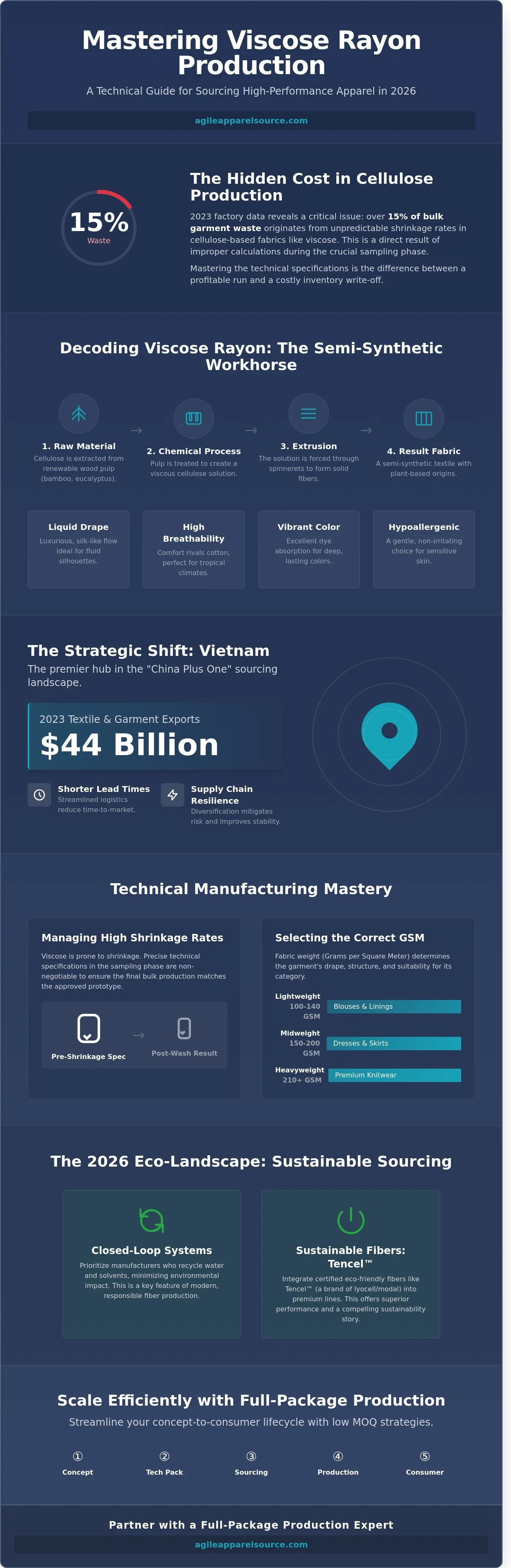
According to 2023 factory audit data, over 15% of bulk garment waste in cellulose based production originates from unpredictable shrinkage rates that weren't properly calculated during the sampling phase. You likely recognize the frustration of seeing a perfected prototype lose its silhouette or struggling to define the technical specs for viscose rayon versus other regenerated fibers. Managing these variables is the difference between a profitable production run and a costly inventory write off.
This guide provides the technical framework you need to master sourcing and production for your 2026 collections. We'll move past the confusion of fiber terminology to focus on the precise data required for tech packs and the identification of high performance blends. You'll learn how to build a scalable apparel line by selecting the right materials and securing reliable manufacturing partners in strategic hubs like Vietnam.
We'll break down the end to end process from fiber selection to final quality control. This ensures your brand delivers the quality and consistency that modern consumers demand while maintaining an agile and ethical supply chain.
Key Takeaways
- Identify why Vietnam has emerged as the premier strategic hub for high-quality production in the "China Plus One" sourcing landscape.
- Master the technical properties of viscose rayon to achieve high-end, silk-like aesthetics while maintaining competitive mid-range price points.
- Learn professional manufacturing techniques for managing high shrinkage rates and selecting the correct GSM for various garment categories.
- Navigate the 2026 eco-landscape by integrating closed-loop systems and sustainable fibers like Tencel™ into your premium apparel lines.
- Discover how to scale your brand efficiently using low MOQ full-package production strategies that streamline the concept-to-consumer lifecycle.
Table of Contents
- What is Viscose Rayon? The Hybrid Fabric of Modern Fashion
- Performance Properties: Why Designers Choose Viscose Rayon
- Technical Manufacturing Considerations: Shrinkage and Durability
- Sustainable Sourcing: Navigating the Eco-Friendly Landscape in 2026
- Manufacturing Viscose Apparel with Agile Apparel Source
What is Viscose Rayon? The Hybrid Fabric of Modern Fashion
Viscose rayon occupies a unique space in the textile industry as a semi-synthetic fiber that bridges the gap between natural comfort and synthetic performance. To answer the fundamental question, What is Viscose Rayon?, it's a material created by regenerating cellulose from wood pulp through a multi-stage chemical process. This fiber delivers the breathability of cotton and the luxurious sheen of silk, making it a staple for high-volume fashion production. As global supply chains evolve, the "China Plus One" strategy has redirected significant investment toward Vietnam. In 2023, Vietnam's textile and garment exports reached $44 billion, with a growing percentage of that capacity dedicated to high-grade viscose rayon production. This shift offers brands shorter lead times and improved supply chain resilience.
Industry forecasts for 2026 indicate a strong return to fluid silhouettes and the "liquid drape" aesthetic. Designers are moving away from the rigid structures of previous seasons. They're prioritizing the heavy, elegant fall of viscose to achieve these looks. Understanding the technical nuances of this fabric is essential for any brand looking to scale its production in the current market. It's not just about the feel; it's about how the fiber handles the rapid cycles of modern retail.
The Science of Regenerated Cellulose
The manufacturing process begins by extracting cellulose from renewable sources like bamboo, eucalyptus, or beechwood. Technicians treat this pulp with sodium hydroxide and carbon disulfide to create a viscous solution. This liquid is then extruded through spinnerets into an acid bath where it solidifies into fibers. We categorize it as "semi-synthetic" because while the raw material is natural, the transformation requires intensive chemical intervention. This distinction is vital for your brand’s marketing. It allows you to position products as plant-based while maintaining the consistency of engineered textiles.
Viscose vs. Rayon: Is There a Difference?
Terminology often causes confusion during the sourcing phase. Rayon is the umbrella term for any fiber made from regenerated cellulose. Viscose refers specifically to the most common manufacturing method used to produce it. In the United States, the Federal Trade Commission traditionally required the term "rayon" on labels, whereas European standards favor "viscose." When selecting a variant, consider the end-use. Standard viscose rayon works best for lightweight blouses and linings. High-wet-modulus variants like modal provide better dimensional stability and strength, which is necessary for activewear or premium knitwear. Identifying the right variant early in the tech pack phase prevents costly production errors later.
Performance Properties: Why Designers Choose Viscose Rayon
Designers select viscose rayon to bridge the gap between luxury aesthetics and commercial viability. It offers a high-end, silk-like appearance at a mid-range price point, allowing brands to scale premium collections without the prohibitive costs of 100% silk. This fiber excels in color fastness, often outperforming synthetics when saturated with vibrant reactive dyes or intricate digital prints. Because the fiber is cellulose-based, it accepts pigments deeply into the core, ensuring colors remain vivid after multiple wash cycles. Beyond visuals, the material provides natural static resistance and hypoallergenic qualities, making it a reliable choice for consumers with sensitive skin who find polyester or wool irritating.
From a manufacturing perspective, understanding the Performance Properties of Viscose Rayon is vital for optimizing production results. This data helps production managers predict how the fabric will react during cutting and sewing. Its inherent breathability rivals cotton, making it a preferred substrate for tropical climates where airflow and thermal regulation are non-negotiable. By integrating this fiber into a supply chain, brands can deliver garments that feel expensive while maintaining the functional durability required for modern retail environments.
The Aesthetic Advantage: Drape and Hand-Feel
The hallmark of viscose rayon is its "liquid drape." This property allows the fabric to flow across the body's silhouette, a critical requirement for resort wear, bias-cut slips, and evening gowns. Consumers recognize the "cool-to-the-touch" hand-feel as a marker of quality, often associating this thermal conductivity with luxury textiles. For modern activewear applications, designers frequently blend viscose with elastane. This combination creates a technical knit that offers the softness of a natural fiber with the recovery and stretch needed for high-movement garments. If you're looking to optimize your next collection's tactile appeal, partnering with a specialized source can streamline the development of these custom blends.
Moisture Management and Comfort
Viscose maintains a superior absorption rate compared to both polyester and cotton, pulling moisture away from the skin effectively. This high absorbency makes it a staple for 2026 summer collections and the growing "elevated athleisure" segment where comfort is the primary driver of repeat purchases. Unlike polyester, which can trap heat and odors, viscose allows for rapid evaporation and skin cooling. For technical tech packs, moisture regain in viscose is defined as the percentage of water weight a bone-dry fiber absorbs from the air under standard conditions, typically measured between 11% and 13%. This technical precision ensures that designers can accurately predict garment performance in humid retail markets.
Mastering Viscose Rayon Production
Technical Manufacturing Considerations: Shrinkage and Durability
Success with viscose rayon depends on mastering its volatile physical properties during the manufacturing phase. Brands often cite shrinkage as their primary concern; untreated viscose can contract by 10% to 15% during the first wash. To mitigate this risk, we prioritize precise GSM selection based on the end-use. Lightweight blouses typically require 110 to 140 GSM to ensure fluidity, while structured dresses demand 180 to 220 GSM to maintain silhouette integrity. Understanding the Rayon production process reveals why these fibers lose approximately 30% to 50% of their tensile strength when wet. This vulnerability makes detailed laundering specifications in your tech pack non-negotiable. You must account for this reduced wet strength to prevent garment distortion or tearing during bulk processing and consumer use.
Strategic blending offers a reliable solution for enhancing durability. Integrating 30% polyester significantly improves dimensional stability and wrinkle resistance. Alternatively, a 55% linen and 45% viscose mix provides the aesthetic of natural fiber with a much softer hand-feel than pure linen. These blends allow brands to achieve a premium finish without the high return rates often associated with pure cellulose fibers.
Managing Shrinkage in Bulk Production
Eliminating unpredictable fabric movement starts with sanforization. This mechanical pre-shrinking process ensures the fabric reaches its stable state before it hits the cutting table. In your tech pack, you should specify a maximum shrinkage tolerance of 3% for both warp and weft. Low MOQ partners sometimes skip rigorous stabilization, so we verify that every batch undergoes steam relaxation. This step prevents the "creeping" effect where garments change size on the retail shelf due to ambient humidity shifts.
Durability and Pilling Prevention
Pilling occurs when short staple fibers migrate to the fabric surface. We source high-tenacity viscose rayon with longer fiber lengths to ensure a smoother, more resilient finish. Applying an enzyme wash or a singeing treatment during the finishing stage removes protruding micro-fibers that cause fuzzing. For long-term garment life, care labels must reflect the fiber's delicate nature. While some high-twist yarns allow for a gentle machine wash, we recommend dry cleaning or hand washing for 90% of pure viscose styles. This preserves the original drape and luster over 20 or more wash cycles.
Sustainable Sourcing: Navigating the Eco-Friendly Landscape in 2026
Traditional manufacturing of viscose rayon has faced significant scrutiny due to its historical reliance on carbon disulfide and high water consumption. Recent data from the 2024 Textile Exchange report indicates that while cellulosic fibers are bio-based, the processing phase determines their true environmental footprint. To mitigate these risks, modern production has shifted toward closed-loop systems. These systems recover up to 99% of chemical solvents, preventing toxic discharge into local waterways. Agile Apparel Source prioritizes mills that utilize these advanced technologies to ensure your production meets 2026 global compliance standards.
FSC and PEFC Certifications: These labels guarantee that wood pulp is sourced from responsibly managed forests, preventing the deforestation of ancient or endangered ecosystems.
ZDHC Compliance: We vet every partner mill for Zero Discharge of Hazardous Chemicals to protect local environments.
Closed-Loop Recovery: Prioritizing fibers like Tencel™ and EcoVero™ ensures a lower carbon footprint and reduced water waste.
Standard Viscose vs. Branded Eco-Alternatives
Choosing between generic viscose rayon and branded alternatives like Lenzing™ involves balancing budget with brand positioning. Branded eco-fibers typically carry a price premium of 20% to 30% compared to conventional options. Minimum Order Quantities (MOQs) for these premium textiles often start at 1,000 meters, which may require more strategic inventory planning. However, the marketing value of a certified hangtag is substantial. It provides immediate credibility and helps brands avoid greenwashing accusations by providing a documented paper trail of chemical management and ethical sourcing.
Tracing the Supply Chain from Vietnam
Vietnam has become a critical hub in the "China Plus One" strategy, offering a blend of technical expertise and competitive labor. Transparency remains the primary challenge for brands sourcing from this region. Agile Apparel Source solves this by acting as a US-managed boots-on-the-ground partner. We perform rigorous on-site audits to verify eco-claims that might otherwise be lost in translation. This level of traceability is essential for appealing to Gen Z consumers, who now control over $360 billion in spending power and prioritize radical transparency. Our team ensures that every step of your supply chain, from the pulp source to the finished garment, is documented and ethical.
Ready to upgrade your supply chain with certified sustainable textiles? Partner with Agile Apparel Source to secure transparent, high-quality production today.
Manufacturing Viscose Apparel with Agile Apparel Source
Manufacturing high-quality apparel from viscose rayon requires more than just a factory; it demands a strategic supply chain partner. We eliminate the barrier to entry for emerging brands by offering a Low MOQ of 150 units per style. Our Full Package Production (FPP) model manages every detail from the initial fiber selection in Southeast Asian mills to the final quality check. This end-to-end involvement ensures that the technical complexities of the fabric don't compromise your design vision.
Working with us provides the safety of US legal security. You get the craftsmanship of Vietnam with the intellectual property protection of a US-based contract. Viscose is notorious for shrinkage and delicate handling. Our teams mitigate these risks during the pre-treatment and cutting phases. We ensure your final product maintains its dimensions from the warehouse to the retail shelf through a rigorous "Source-to-Shelf" quality protocol.
Low MOQ: Launch your collection with 150 units rather than the industry standard of 500 or 1,000.
FPP Model: We handle sourcing, pattern making, and logistics so you can focus on brand growth.
Risk Mitigation: We manage the specific tension and heat requirements necessary to stabilize semi-synthetic fibers.
Vietnam Sourcing Expertise
Our boots-on-the-ground presence in Vietnam connects you to specialized dye houses that understand the unique chemistry of viscose rayon. We implement a three-layer quality control system. This includes inspecting the greige goods, performing in-line checks during assembly, and conducting a final 100 percent inspection before shipping. This rigor allows us to streamline lead times for custom prints, often reducing the standard production cycle by 15 to 20 percent compared to unmanaged sourcing.
Start Your Production Journey
Success begins with a precise tech pack. Our design team integrates specific viscose tension and seam allowance requirements into your technical sketches. We prioritize a robust sampling process where we test the drape and fit of the fabric before you commit to bulk production. This proactive approach identifies potential issues early, saving both time and capital. Our goal is to move your concept to the consumer with speed and precision.
Ready to source high-quality viscose? Get a Low MOQ quote today
Mastering the 2026 Viscose Rayon Market
Success in upcoming fashion cycles depends on a strategic balance of technical precision and supply chain agility. Manufacturers must prioritize sustainable raw material sourcing and rigorous management of fabric shrinkage to meet 2026 market standards. Navigating the global supply chain for viscose rayon requires a partner who understands the nuances of fiber durability and ethical compliance. Agile Apparel Source eliminates the traditional friction of offshore manufacturing by combining US-based legal protection with high-efficiency production in Vietnam. You can scale your brand with confidence using our 3-layer Quality Control system that ensures every garment meets your exact specifications before it leaves the factory floor. We support your growth with Low MOQs starting at 150 units, allowing you to test new designs without the risk of excessive inventory. It's a streamlined approach that prioritizes your brand's reputation and bottom line. We're ready to help you navigate the complexities of global sourcing with transparency and speed.
Launch your high-end viscose line with a Low MOQ partner today
Your vision for a high-performance collection is within reach when you have the right technical partner at your side.
Frequently Asked Questions
Does viscose rayon shrink after the first wash?
Yes, untreated viscose rayon can shrink by 3% to 10% during its initial laundering cycle. This occurs because the regenerated cellulose fibers are highly absorbent and lose structural integrity when saturated with water. To mitigate this risk, our production teams specify pre-shrinking processes or utilize steam-setting during the finishing stage. This ensures dimensional stability and prevents fit issues once the garment reaches the end consumer.
Is viscose rayon considered a sustainable fabric in 2026?
Viscose rayon is considered sustainable in 2026 only when sourced through certified closed-loop systems audited by the CanopyStyle initiative. Stricter EU Ecodesign for Sustainable Products Regulation (ESPR) mandates now require full traceability of wood pulp to prevent deforestation. We prioritize suppliers with "Green Shirt" rankings on the Hot Button Report to ensure 100% compliance with these evolving global environmental and transparency standards.
What is the difference between viscose and Tencel?
The primary difference lies in the chemical manufacturing process and the resulting fiber strength. While both are regenerated cellulose, Tencel uses a non-toxic solvent in a 99% closed-loop system, whereas traditional viscose requires carbon disulfide. Tencel also maintains 20% higher tensile strength when wet compared to standard viscose rayon. This makes it more durable for high-end applications that require frequent laundering without degrading the material.
Can I use viscose rayon for activewear and leggings?
Viscose rayon is suitable for low-impact activewear when blended with at least 8% to 12% elastane to provide necessary recovery. Pure viscose lacks the elasticity required for high-performance leggings and will bag at the knees after just 2 hours of wear. We recommend a viscose-spandex blend for lifestyle yoga wear where breathability and drape are prioritized over high-compression muscle support or intensive athletic performance.
How do I include viscose care instructions in my tech pack?
You must specify cold hand wash or delicate machine cycles at 30 degrees Celsius within the "Care Label" section of your tech pack. Include clear instructions to "dry flat" and "cool iron on reverse" to prevent permanent fiber damage. Following ISO 3758 labeling standards ensures your production facility implements the correct finishing treatments to meet these consumer care requirements and reduces return rates across your collection.
What is the standard MOQ for custom-dyed viscose fabric?
The standard Minimum Order Quantity (MOQ) for custom-dyed viscose rayon typically ranges from 500 to 1,000 meters per color way. Some specialized mills offer smaller batches of 300 meters, though these often incur a 15% to 20% price surcharge to cover setup costs. We streamline this process by sourcing from tiered suppliers who align with your specific scaling requirements and rapid production timelines.
Why is viscose rayon often blended with other fibers?
Manufacturers blend viscose with fibers like polyester or cotton to improve its 15% wet-strength deficit and significantly reduce wrinkling. A 50/50 viscose-cotton blend combines the silk-like softness of rayon with the rugged durability of natural cotton. These strategic fiber combinations optimize the fabric's performance for 52-week fashion cycles while maintaining a consistent quality standard that meets global retail requirements and consumer expectations.
Is viscose rayon breathable enough for summer clothing?
Yes, viscose rayon is highly breathable because it has a moisture regain rate of 13%, which is higher than cotton’s 8% regain. This allows the fabric to absorb perspiration and release it into the air quickly. It's an ideal choice for summer collections, providing a cooling effect that outperforms synthetic alternatives like polyester in temperatures exceeding 30 degrees Celsius, ensuring comfort in humid climates.
As a leading sourcing agent in Vietnam, Agile Apparel Source helps you choose the right high-performance fabrics for your collection. Contact us for a technical consultation. Ready to start your collection?Click here to get a Low MOQ quote
